Holmes Brand Worlds
These are not centered tech icons. They are divergent identity systems for a local-first agent memory product that sells proof, continuity, and working context to serious software teams.
Lead candidates
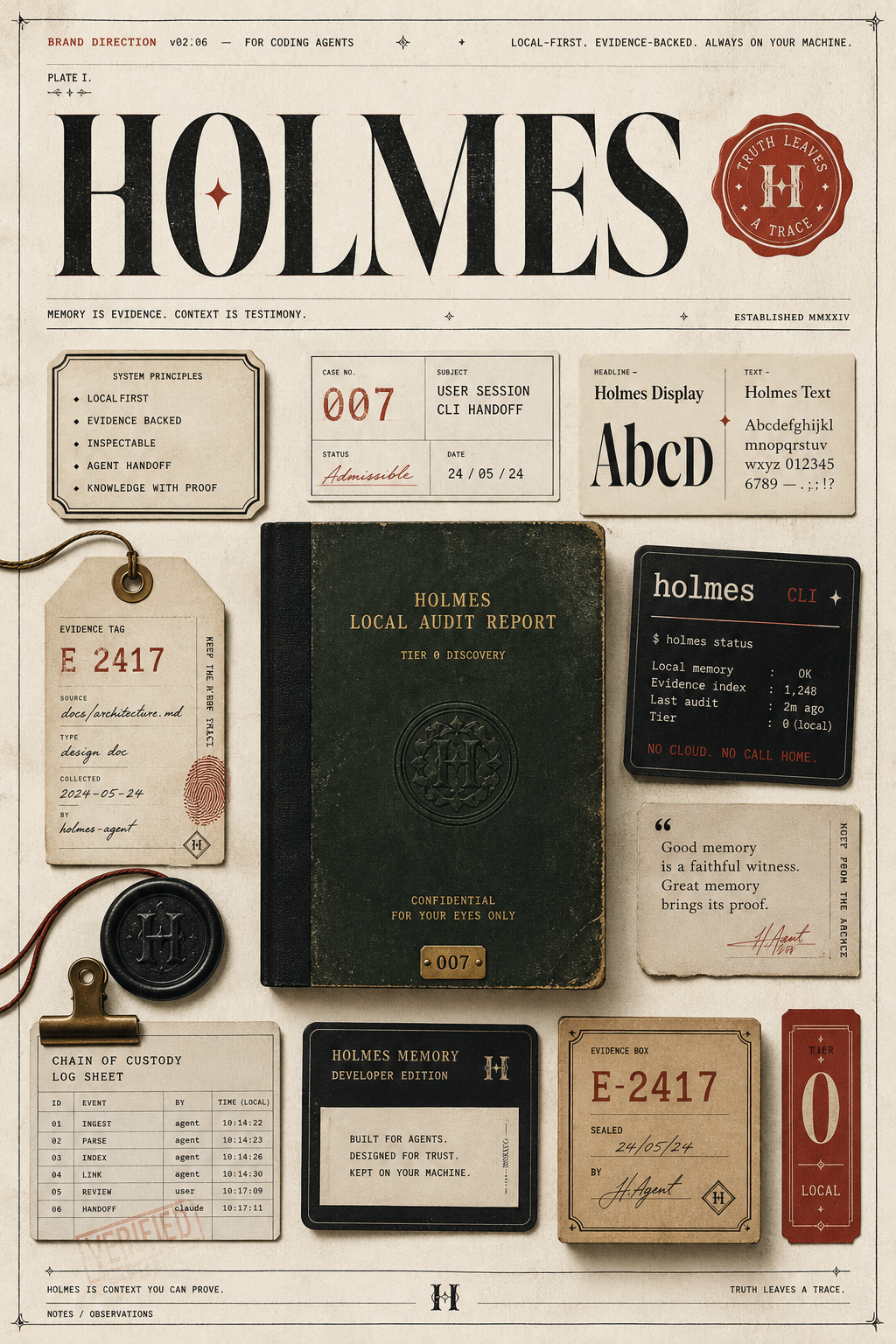
Evidence as identity
Strongest fit for Holmes as an investigator of past work. Use the masthead, stamp language, and ledger framing; redraw small text and seals if selected.
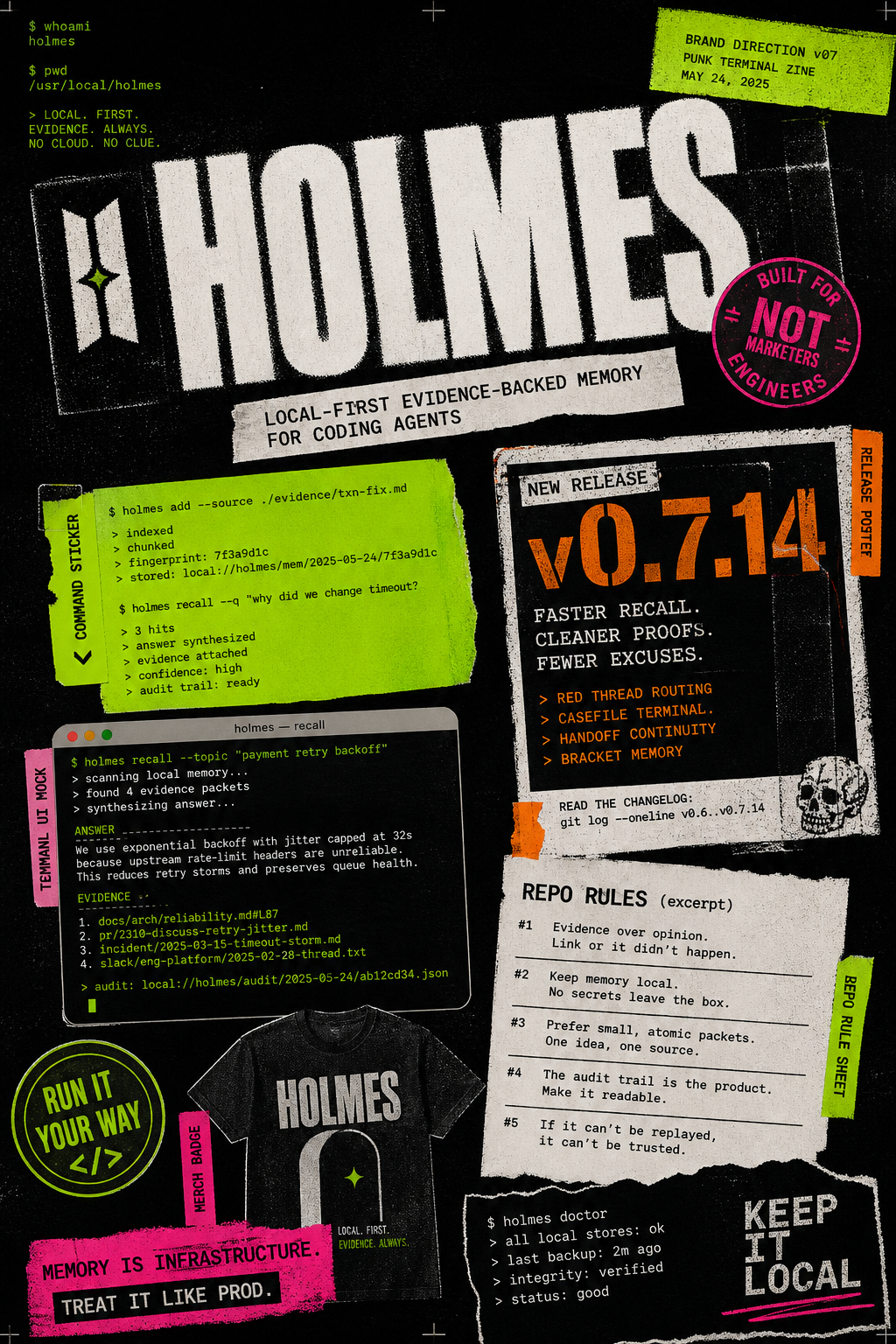
Developer cult object
The furthest break from the earlier pass. Great for a launch identity, CLI splash, stickers, and hacker events; likely too loud for the default enterprise surface.
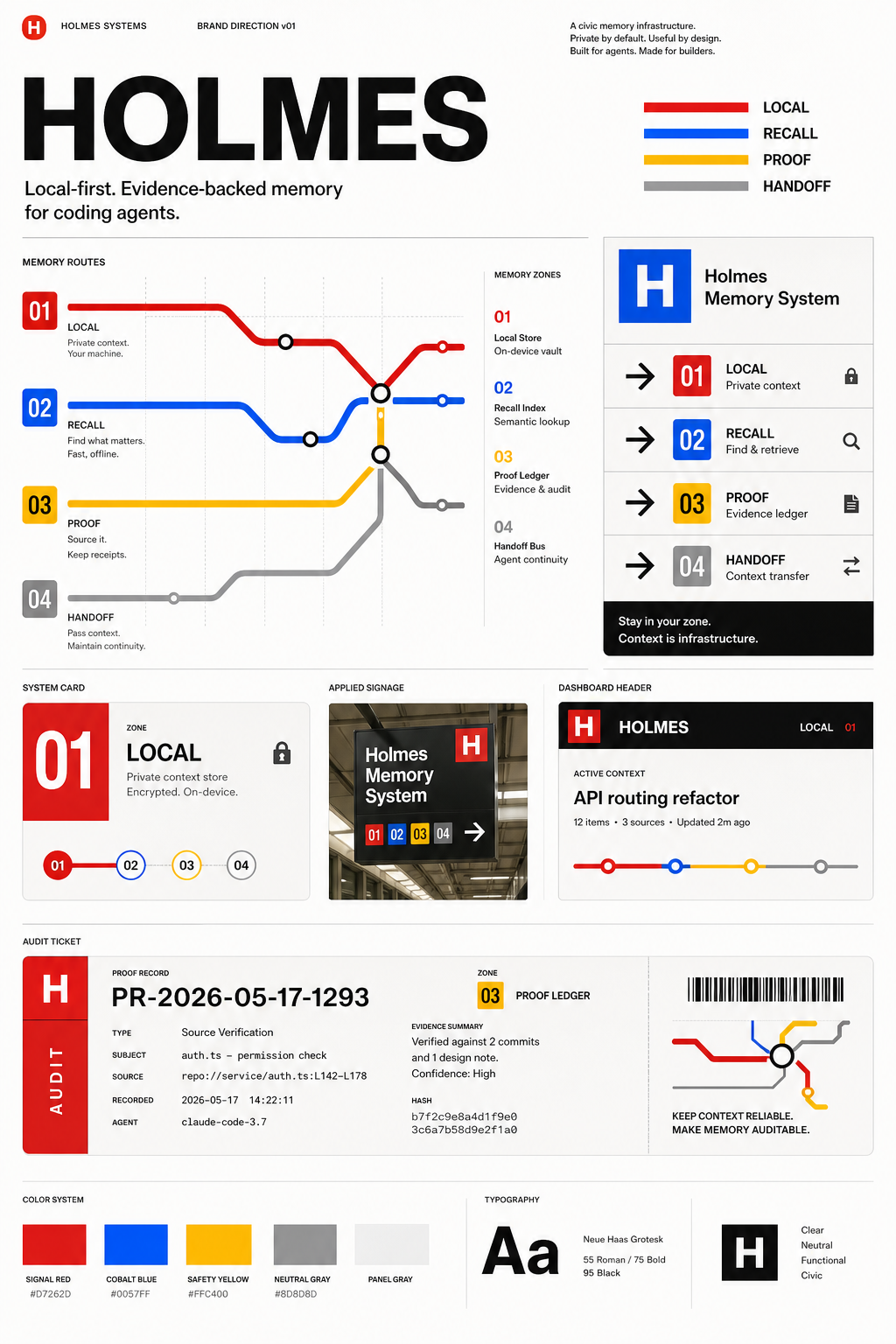
Infrastructure signage
The cleanest production candidate. It makes Holmes feel like durable infrastructure, not a novelty. This can scale into docs, app UI, diagrams, and release artifacts.
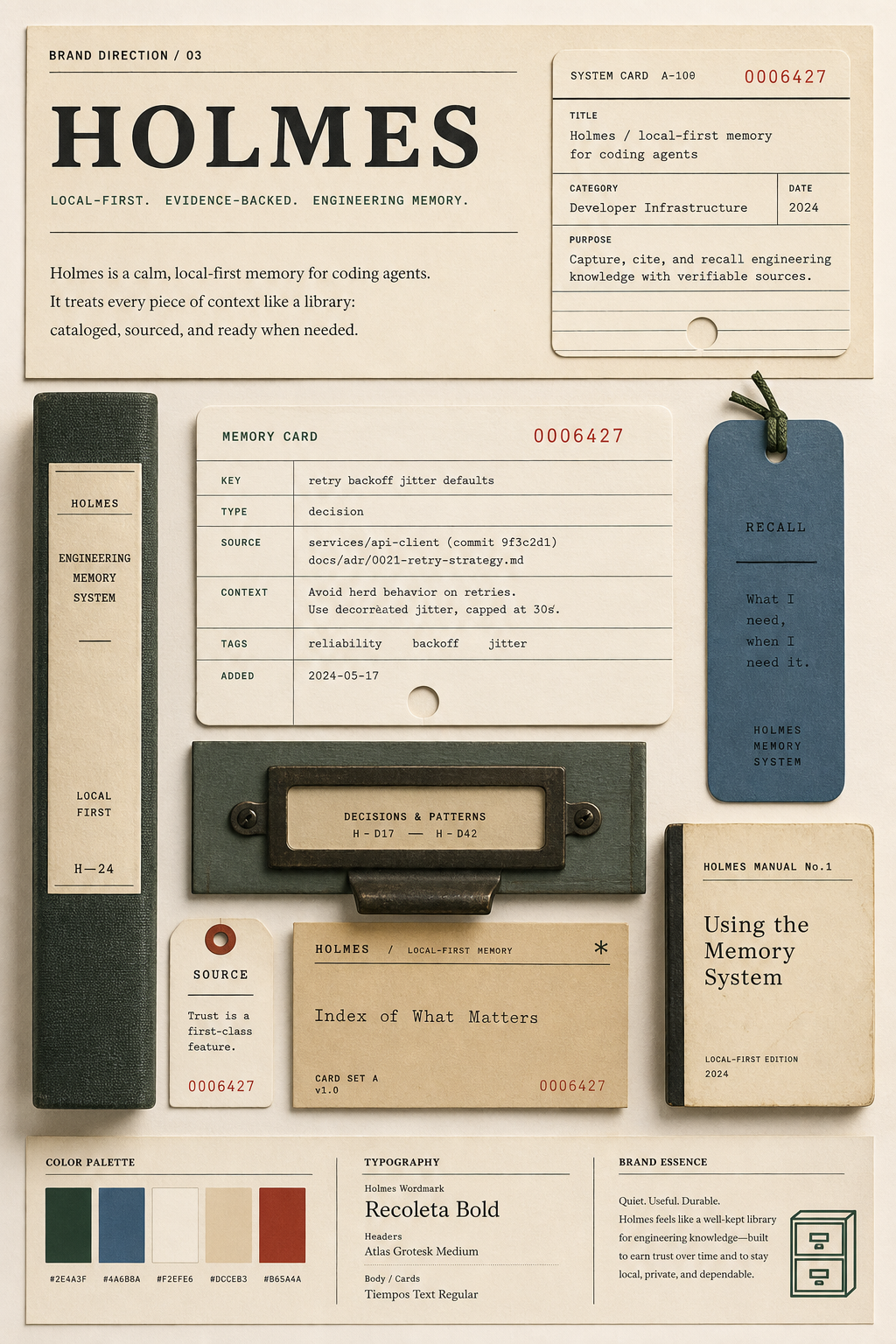
Retrieval culture
Warm, tactile, and surprisingly ownable. It moves Holmes away from the AI-memory sameness of nodes, brains, and abstract loops.
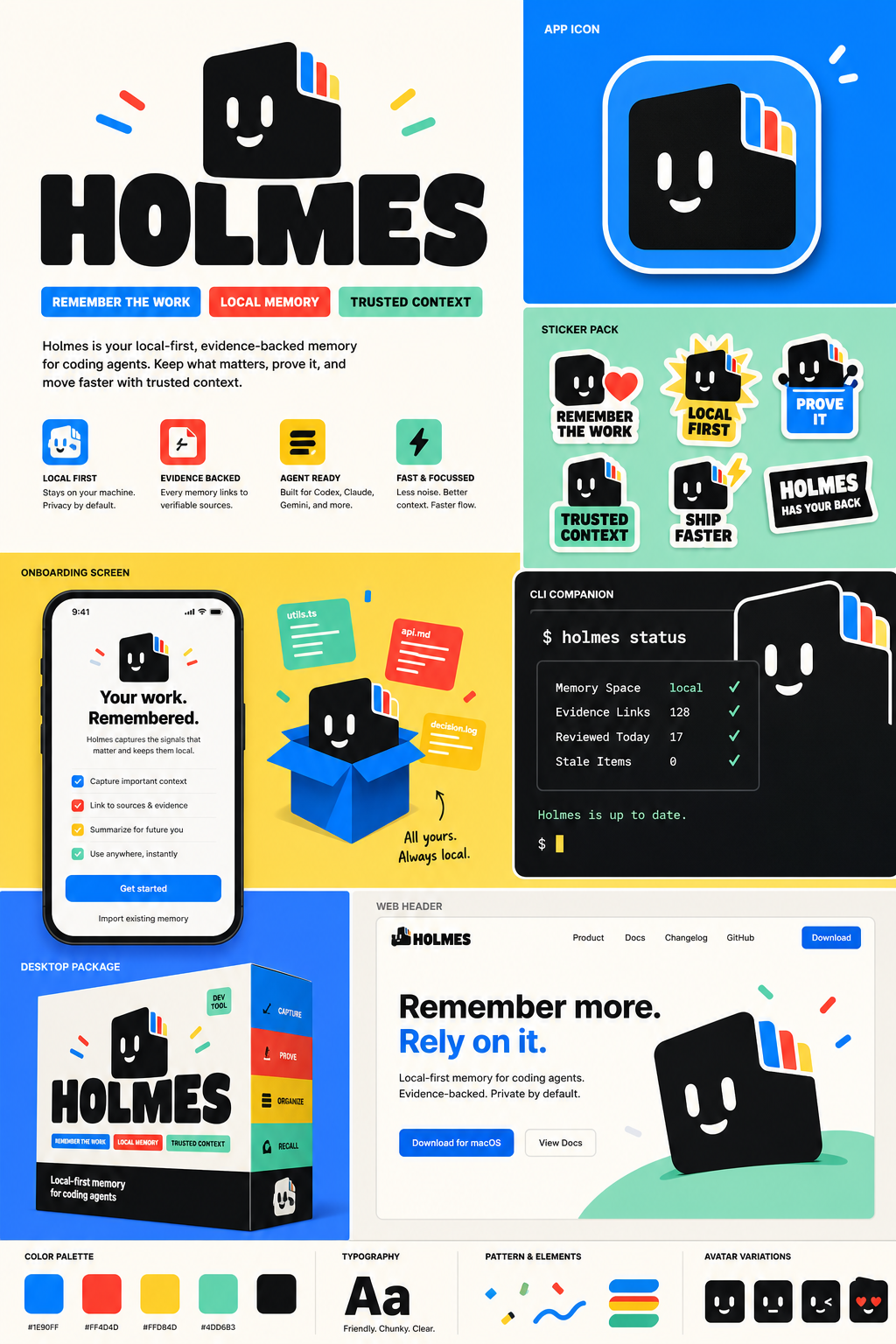
Useful object
Good if the product wants approachable, practical, and tactile. It is less enterprise, but much more memorable than a pure software mark.
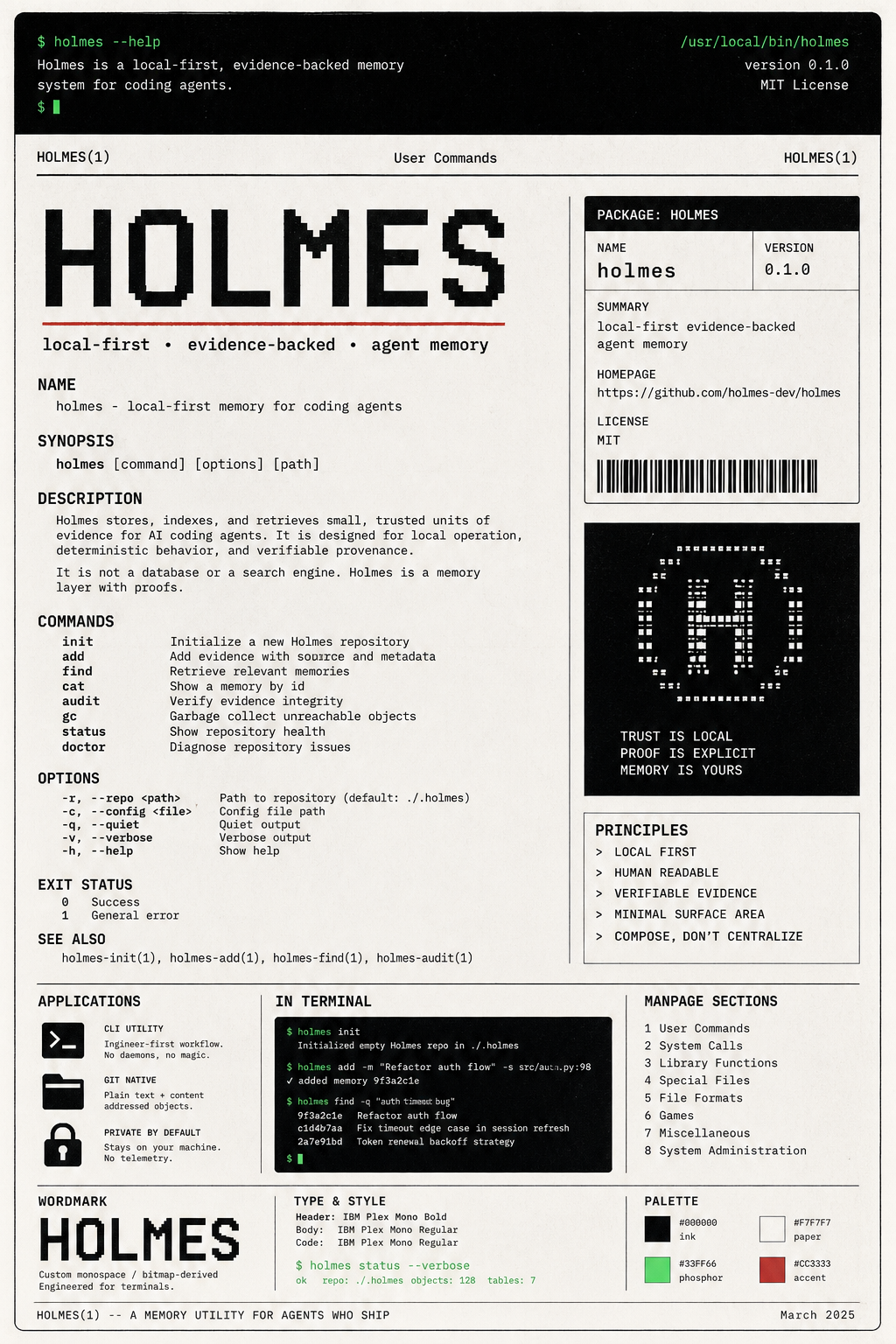
Tool with lineage
Most engineer-native. It can become a restrained CLI-first identity, with manpage typography, terminal docs, and zero marketing gloss.
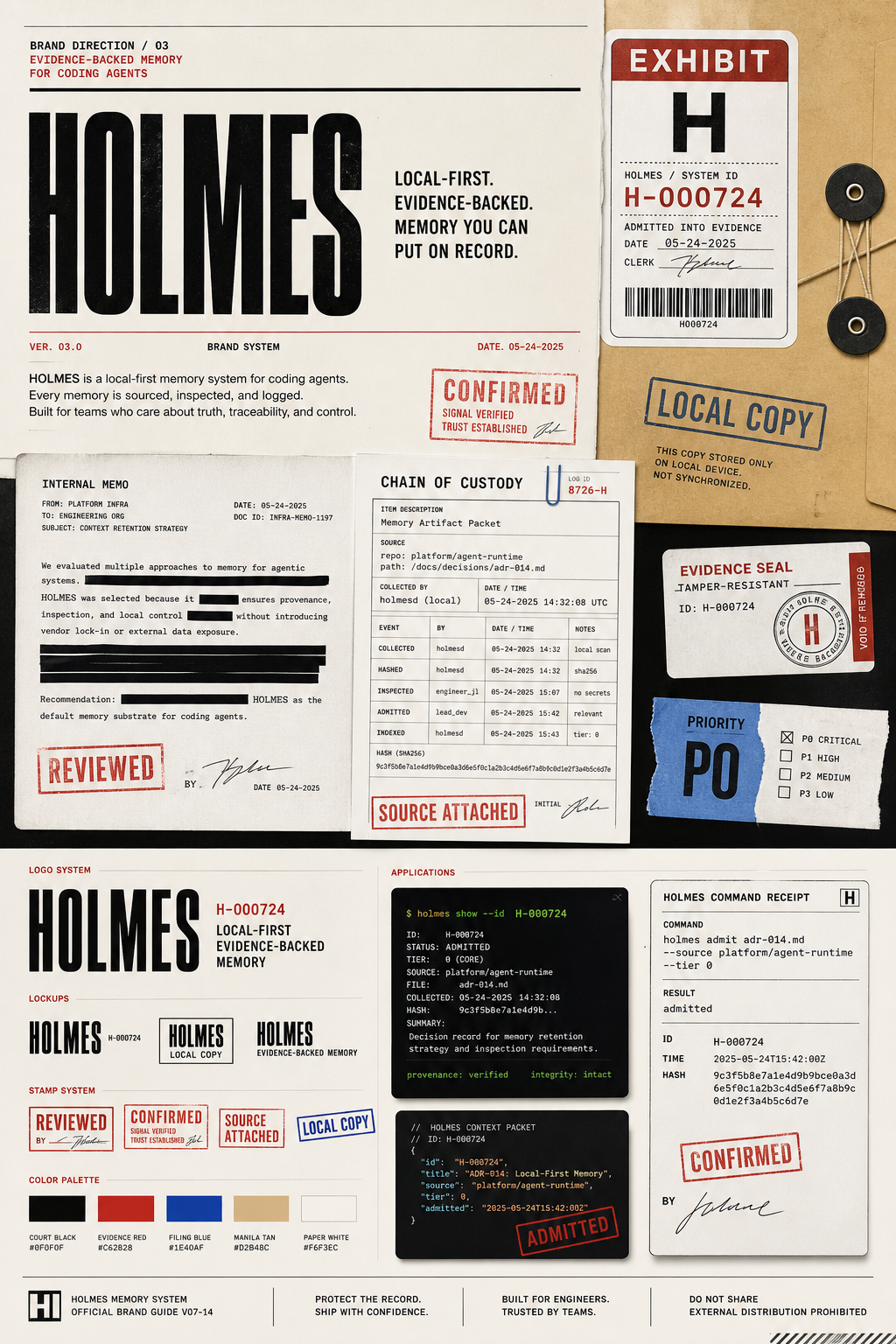
Proof archive
Useful for governance and audit-heavy positioning. It has real texture, but should be softened if Holmes wants to feel like everyday developer infrastructure.
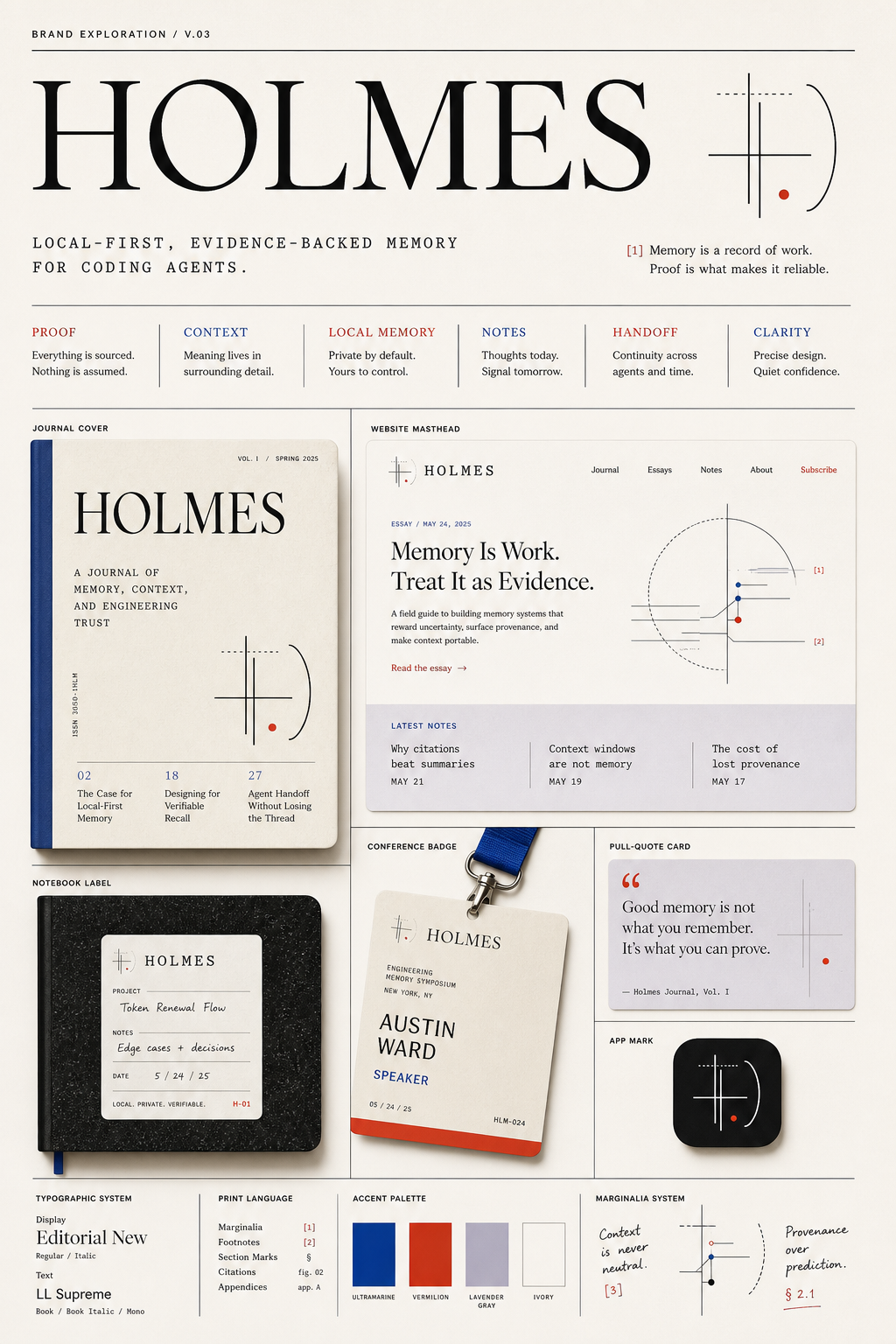
Editorial intelligence
A smart publishing-world direction for research notes, architecture reviews, and product essays. Strong secondary language even if not the primary mark.